From Inventory to Fulfillment: How a D2C Ecommerce Agency Streamlines Operations
Checking out the Potential of D2C Ecommerce: A Comprehensive Guide for Services
The D2C ecommerce model presents a significant shift in just how brand names engage with customers. It makes it possible for firms to bypass typical retail channels, promoting much deeper connections and possibly increased profit margins. This method is not without its intricacies. Recognizing the subtleties of D2C ecommerce is important for brands aiming to thrive. What techniques can they adopt to navigate this evolving landscape successfully? The solutions might redefine their company strategies.
Understanding the D2C Ecommerce Model
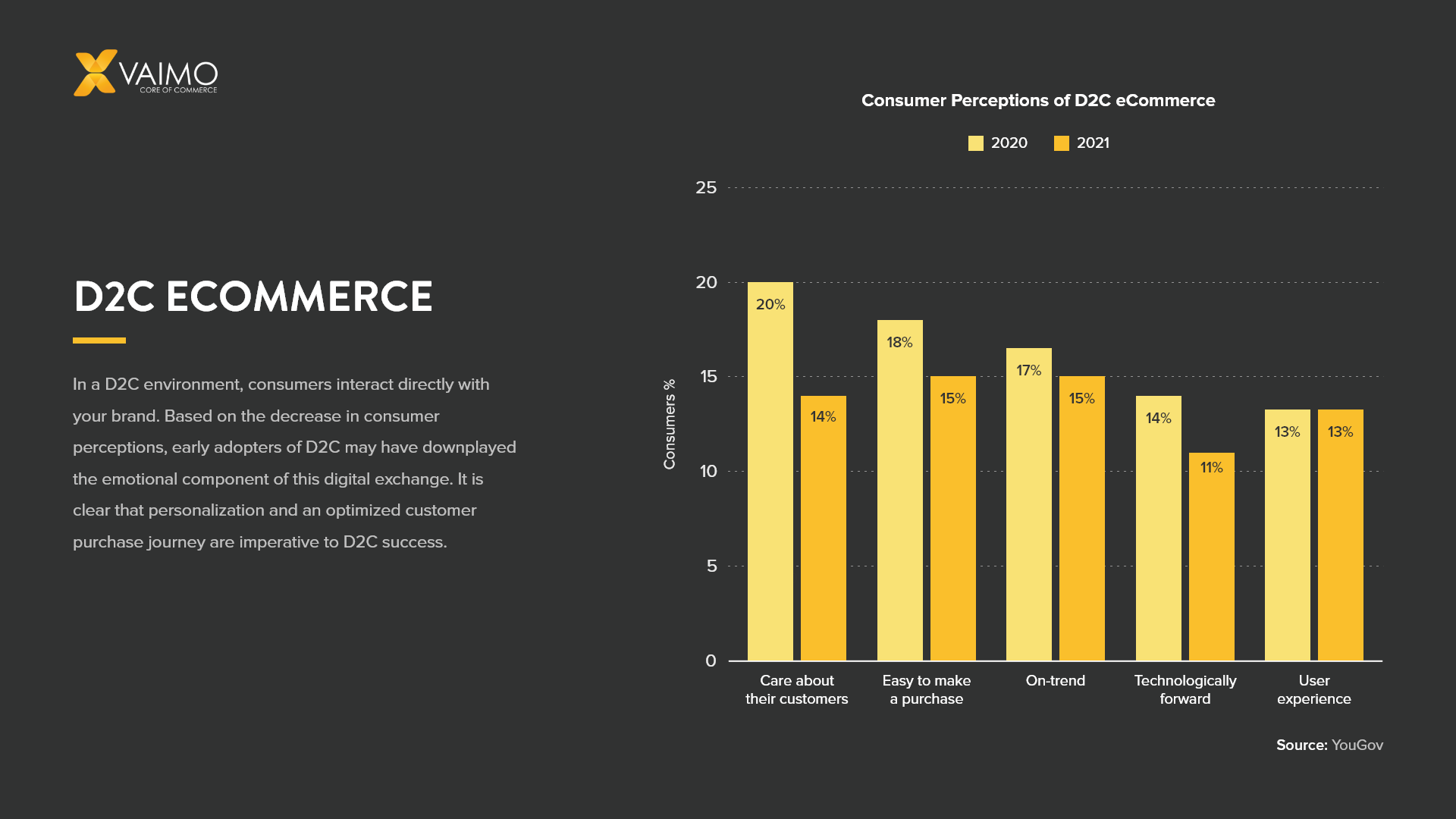
Key Conveniences of D2C Ecommerce for Brands
The D2C ecommerce model supplies brand names considerable benefits, especially concerning boosted revenue margins. By getting rid of intermediaries, firms can retain a larger share of sales income. Furthermore, this direct relationship with consumers fosters boosted brand commitment, motivating repeat acquisitions and lasting engagement.
Boosted Revenue Margins
Enhanced Brand Name Loyalty
Structure on the monetary advantages of D2C ecommerce, boosted brand name commitment becomes one more important advantage for firms involving straight with customers. By establishing a straight connection, brands can promote deeper connections with their clients, getting understandings right into actions and choices. This direct interaction permits even more individualized advertising approaches, which reverberate strongly with consumers. Furthermore, brand names have the possibility to manage their messaging and consumer experience, enhancing brand values and building count on. When clients really feel an individual link, they are more probable to return, advocate for the brand, and join community involvement. Inevitably, boosted brand name loyalty not just drives repeat purchases yet additionally cultivates an enthusiastic client base, further solidifying a brand's setting in the marketplace.
Obstacles Encountered by D2C Brands
D2C brand names run into a number of considerable challenges that can affect their success. Supply monitoring concerns can cause stock shortages or excess, complicating procedures and consumer satisfaction. Furthermore, advertising and marketing spending plan restrictions often restrict the capacity to properly involve and get to target market.
Inventory Management Issues
Reliable inventory monitoring presents a powerful challenge for lots of brands running in the direct-to-consumer (D2C) space. These brands frequently grapple with fluctuating demand, which can result in overstock or stockouts, ultimately impacting client complete satisfaction and profits. Additionally, the lack of innovative stock radar can lead to disparities between actual supply levels and reported data, making complex order gratification. The diverse series of products D2C brand names usually supply also complicates stock management, as variations in colors, styles, and dimensions require more meticulous oversight. Moreover, several D2C organizations might battle with limited warehousing capacities, causing ineffective use room and resources. Efficient inventory monitoring stays a critical difficulty for D2C brands intending for sustainable growth and functional performance.
Advertising And Marketing Spending Plan Constraints
Maneuvering advertising budget plan restraints is a substantial challenge for numerous direct-to-consumer (D2C) brands. Minimal funds commonly restrict these companies' capacity to buy comprehensive advertising methods, leading to decreased presence in an affordable market. D2C brand names frequently come to grips with the requirement to take full advantage of return on investment (ROI) while targeting specific audiences successfully. This challenge is exacerbated by increasing expenses in electronic advertising and the necessity to assign funds across numerous channels, consisting of social networks, online search engine, and email marketing. Lots of D2C brand names should innovate cost-effective advertising options, leveraging natural growth approaches and influencer partnerships. Inevitably, successfully steering these budget plan constraints is essential for sustaining growth and achieving long-lasting productivity in the advancing ecommerce landscape.
Techniques for Constructing an Effective D2C Ecommerce Organization
As customers increasingly seek direct links with brands, establishing a successful D2C ecommerce business calls for a strategic method that prioritizes customer involvement and trust. One effective approach is to develop engaging brand name narratives that reverberate with target market, fostering emotional connections. Making use of social media sites systems can boost visibility and help with two-way interaction, permitting brand names to involve directly with customers.Moreover, individualized experiences via customized marketing initiatives can significantly boost client retention and commitment. Executing loyalty programs and supplying exclusive offers can additionally incentivize repeat purchases.Streamlining the buying procedure is crucial, making certain a straightforward user interface that improves the purchasing experience. Additionally, transparent interaction relating to shipping and returns constructs trust and urges customer confidence.Finally, actively looking for consumer comments and reacting to it shows a commitment to improvement and customer satisfaction, vital elements in the competitive D2C landscape.
Leveraging Technology for Enhanced Consumer Experience
In today's affordable D2C ecommerce landscape, technology plays a pivotal function in forming client experiences. Businesses significantly utilize innovative tools such as synthetic knowledge, chatbots, and individualized algorithms to enhance communications and improve the purchasing procedure. By integrating these modern technologies, brands can give customized product suggestions based upon individual choices and buying actions, promoting an extra appealing experience.Moreover, receptive website styles and mobile applications assure that clients can access services perfectly across various devices. Improved repayment solutions, including one-click checkouts and digital budgets, better streamline transactions, making it easier for customers to make purchases.Data analytics additionally makes it possible for companies to collect insights into consumer behavior, permitting continuous enhancement of offerings and solutions. On the whole, leveraging technology not only boosts consumer contentment yet also grows commitment, inevitably driving long-lasting success in the D2C ecommerce field.
Advertising Tactics to Drive D2C Sales
Exactly how can brand names effectively capture the attention of consumers in a saturated market? To flourish in the direct-to-consumer (D2C) landscape, brands should use targeted marketing strategies. Making use of social networks platforms, brand names can engage consumers through interactive content, influencer partnerships, and user-generated posts. Personalized email projects can likewise foster a sense of link, offering tailored promotions based upon customer actions and preferences.Moreover, storytelling plays an important role in differentiating a brand name's narrative, making it memorable and relatable. Brands should invest in seo (SEARCH ENGINE OPTIMIZATION) to boost presence, ensuring their products are conveniently visible online. In addition, leveraging data analytics permits businesses to fine-tune their check here marketing approaches and understand customer fads much better. Eventually, a multi-channel strategy that combines creativity with data-driven insights can substantially increase D2C sales, enabling brands to stand out in a jampacked industry.
Future Fads in D2C Ecommerce
With the fast advancement of innovation and customer choices, the future of D2C ecommerce is positioned for significant transformation. Arising patterns indicate a shift towards hyper-personalization, where brands leverage data analytics to tailor offerings to private customer requirements. This customization enhances customer experiences, fostering loyalty and engagement.Moreover, sustainability is becoming an essential element, with customers increasingly favoring brands that focus on eco-friendly practices - D2C Ecommerce Agency. Companies are anticipated to embrace clear supply chains and sustainable products to satisfy this demand.The combination of synthetic intelligence and augmented truth will furthermore change the purchasing experience, permitting customers to visualize products in their atmospheres before acquisition. Furthermore, social commerce is expected to grow, as platforms like Instagram and TikTok facilitate seamless buying experiences directly within social media.These fads jointly indicate a vibrant future for D2C ecommerce, highlighting customer-centric strategies and cutting-edge innovations that redefine consumer interactions
Often Asked Inquiries
What Industries Advantage Most From D2C Ecommerce?
The current inquiry highlights sectors that grow with direct-to-consumer (D2C) ecommerce. Incredibly, fashion, elegance, electronics, and food fields take advantage of D2C versions to increase brand name loyalty, enhance customer connections, and optimize revenue margins efficiently.
Exactly How Do Shipping Costs Impact D2C Pricing Approaches?
Delivering expenses substantially affect D2C rates techniques. Businesses need to stabilize these expenses with competitive pricing, thinking about consumer assumptions and profit margins. Reliable monitoring of delivery can boost consumer satisfaction and drive sales in direct-to-consumer designs.
What Settlement Alternatives Should D2C Businesses Offer?
D2C companies must use varied payment choices, consisting of credit/debit cards, electronic budgets, and buy now, pay later solutions. This selection improves consumer convenience, enhances conversion rates, and accommodates different consumer choices in the on the internet purchasing landscape.
Exactly How Can D2C Brands Deal With Client Returns Properly?
D2C brands can take care of consumer returns successfully by carrying out easy to use return policies, providing prepaid shipping labels, and guaranteeing punctual refunds (D2C Ecommerce Agency). Clear interaction and structured processes improve client contentment and motivate repeat service
What Legal Considerations Exist for D2C Ecommerce Workflow?
Lawful factors to consider for D2C ecommerce procedures consist of compliance with customer defense regulations, data privacy regulations, copyright rights, and tax needs. Brand names should navigate these intricacies to prevent lawful risks and assure smooth operations. By removing intermediaries, D2C brands can supply affordable rates and foster a more intimate partnership with their customers.The D2C model is identified by its reliance on electronic systems, enabling brands to use social media, online markets, and their very own internet sites to engage with consumers straight. D2C ecommerce assists in the collection of valuable customer information, allowing brand names to customize their offerings and advertising and marketing techniques properly, eventually driving sales and raising margins. In addition, brands have the possibility to control their messaging and customer experience, reinforcing brand worths and constructing count on. As consumers significantly look for direct connections with brands, developing an effective D2C ecommerce service requires a calculated strategy that focuses on client engagement and trust fund. D2C brand names can handle client returns effectively by carrying out straightforward return plans, supplying pre-paid delivery tags, and ensuring punctual refunds.